A few years ago I managed to coax my wife to join me on a birding weekend to a remote but beautiful location in Goa. We did see a large number of birds and if I had to select a set of adjectives to describe the trip they’d probably be: ‘fantastic’, ‘superb’, and ‘amazing’.
For my wife on the other hand, if my memory serves me right, I do believe her three most frequently used expressions were: ‘total nightmare’, ‘utterly boring’ and ‘should-have-followed-my-gut-feeling-and-given-the-place-a-skip’!
The wife is a non-birder and the ‘apples to oranges’ comparison is unfair.
What is surprising is that, even among birders, all else being equal, conflicting expectations contribute significantly to chasmic discrepancies in individual ratings.
A case in point is a recent trip I did to the North East of India. In what follows I’ve made a sincere attempt to present a factual narration of the trip.
I’d leave it to you to decide on the rating it deserves…

This trip had a number of ‘firsts’. For starters, it was the longest birding trip I have ever done.
18 days in all.
We Flew into Dibrugargh on the 10th of February 2019 and flew out of Guwahati on the 28th. Spending a few days at a time at various birding hotspots on the route detailed in the map above.
Let me tell you, living out of a suitcase for a prolonged period of time, (another first for me), is an art in itself!
10-13 February, 2019
Maguri Beel, Tinsukia, Assam.

Our first stop was a little over an hour’s drive east of Dibrugargh to a place called Maguri Beel in the Tinsukia district of Assam.
Situated at the meeting point of the Lohit and Dibru rivers as they flow into the mighty Bhramaputra, Maguri Beel is a large shallow swampy water body that absolutely teems with birdlife.
‘Beel’ is the Assamese word for water body and ‘Maguri’ means catfish. Overfishing had ensured the the catfish have long disappeared but the name lives on. Barely a few feet at its deepest point it absolutely teems with birdlife.

We stayed at the Kohuwan Eco-camp located at the very edge of Maguri Beel. The rooms, constructed predominantly in wood, were small and basic. Each twin-sharing room had attached bathroom and hot water buckets were available on request.
Meals were taken at any one of a couple of gazebos on the grounds just outside the living area.
Our camp overlooked the beel and the view, especially at sunrise and sunset, was indescribably serene and peaceful.

There are two ways of birding around the camp area. Pole driven boats can be hired to get onto the beel.
Calling it a swamp is misleading.
Once on the beel the water is crystal clear and silently negotiating the vast water body among the water lilies is a wonderful experience in itself.

One can also opt to cross the river on foot on the newly constructed bridge and explore the grasslands on either side of the road.
Below is a small selection of images. (I will post a complete set of images in the gallery section at a later date)


While boating down the beel, the duck are shy and even with a 1.4x teleconverter on the 500mm lens I still found that I was woefully short of ‘reach’.
Like I said earlier, I did get many more images and I will post a full set in the gallery section later. Sadly, the sighting of one of our target species for this location, the falcated duck, eluded us.
During our stay here we also explored the forested area around Digboi, Jeypur and the Dehing-Patkai Reserve forest. Target species include the red-headed trogon, pale-capped pigeon, white-winged duck and oriental bay owl.
The forest here are incredibly dense and hold a variety of native flora including the elephant apple, the hollong tree (state tree of Assam) and a mind-boggling variety of exotic orchids to name but a few. It is a veritable paradise for butterflies as well boasting of over 310 species of the winged beauties.
Pale-capped pigeons were known to frequent the trees around a small swampy clearing about a 10-minute walk on a dirt path through dense forest.
Elephant droppings and their huge foot prints in the swamp were ample evidence of pachyderm presence in the area. A constant reminder of the repeated warnings by our guide: “Elephants don’t like humans. If you happen to see one do not think twice. Just drop your camera and run!”

Scary!
The eerie sudden break in silence by the occasional thud of wild elephant apples as they fell to the ground certainly did’t help to relieve the uneasiness.

We did get to sight the pale-capped pigeons and got some images as well but they were heavily back-lit and needed to be severely cropped. The only reason why I managed to get a few barely presentable images is thanks to Mr. – or Mrs. – Photoshop. (The last thing I want to be accused of is being sexist!)
We did get several sightings of red-headed trogon. Including one really great opportunity to get a classic image but in the excitement I screwed up my camera settings and I was left empty-handed. Grrrrr…!


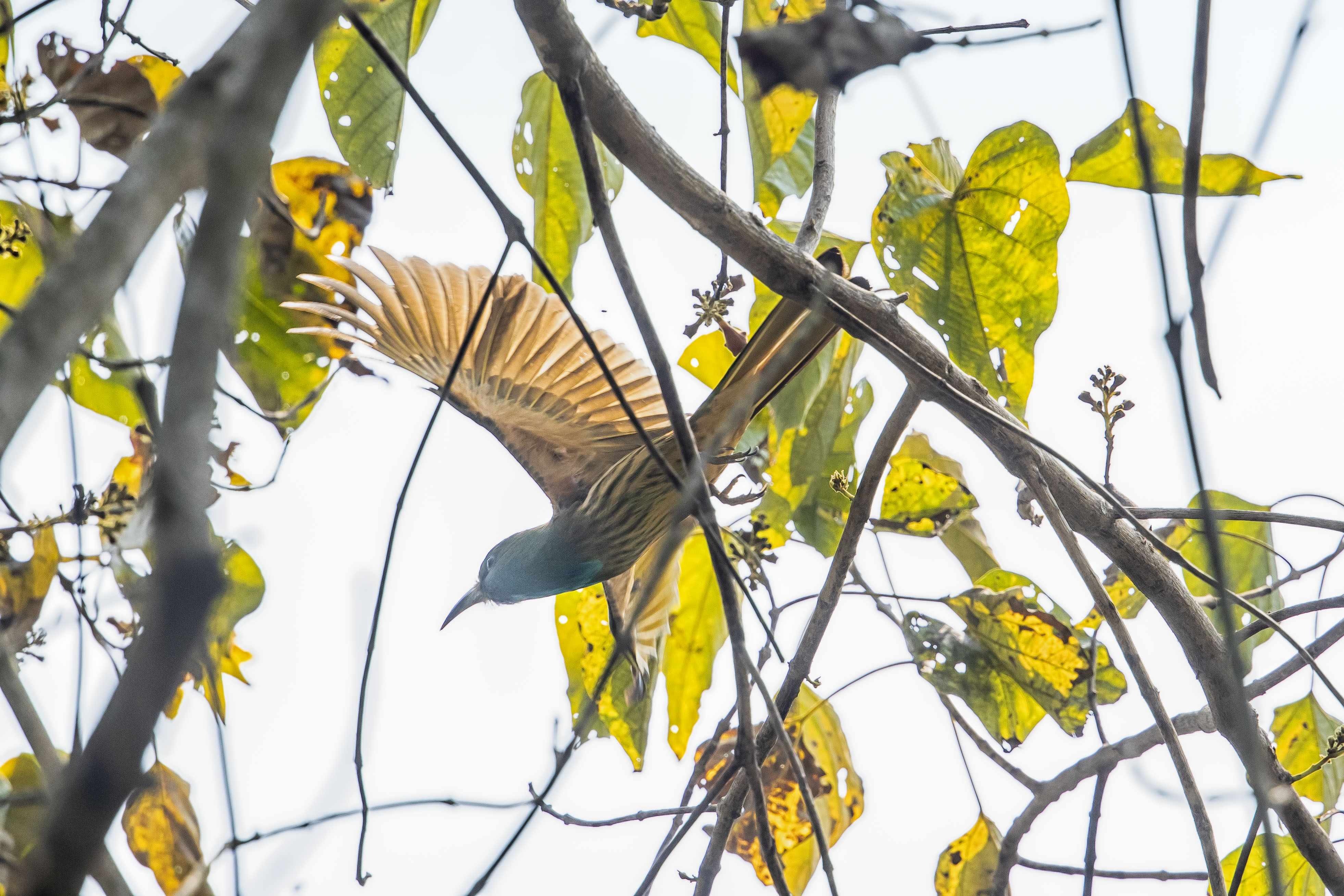
Disappointingly our searches for brown hornbill and white-winged duck were also unsuccessful. Without even a sighting of either. Instead we did get a fleeting view of a grey peacock (I was too stunned to take a shot) as it crossed the road and super sightings (in very low light) of long tailed broadbills as well as a few other birds.


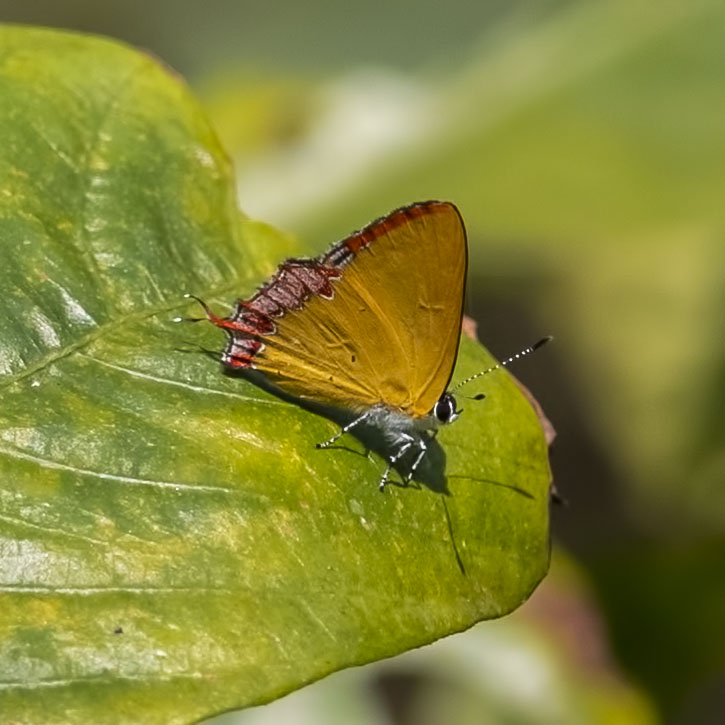
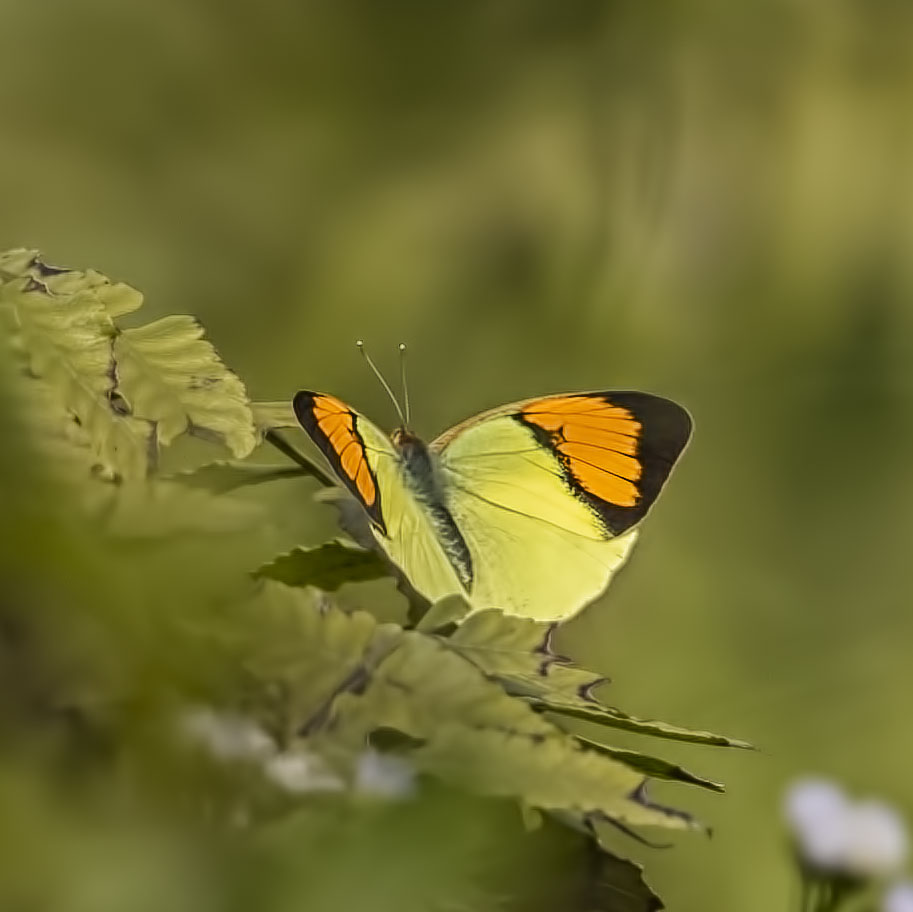
While waiting for the brown hornbills to show up I passed my time shooting butterflies.



On the second evening we went in search of Oriental bay owls.
It was late in the evening, around 6pm, and already pitch dark. Driving on a deserted stretch of highway we hear the bird call and quickly park the car and get out.
A few moments later a large beautiful owl is locked in the beam of the torch. It flies away before any of us can get off a shot. For the next 5-10 minutes the bird calls frequently but we are unable to get a visual sighting.
Then, suddenly a loud snap of a twig in the trees behind us just off the road causes our guide to swing around in alarm. Definitely a large animal. A panther maybe? Or even an elephant? Better sense prevails and we hurry back into the car and drive off.
Back in camp we hear several calls of brown hawk owls and do get to see a few but were unable to get any images.
Our only consolation were a pair of resident Asian barred owlets that were more than willing to pose for our cameras.

14, February, 2019
Roing, Arunachal Pradesh.

From Tinsukia it is a couple of hours drive to Roing.
Situated at the foot of the Mishmi Hills it is a small town that has a stunning view. A quick bite, including some really delicious rosogollas, and it was on to our stay for the night, a log cabin at the Mishmi Hills resort.

The target species here was spot-breasted parrotbill that inhabit the tall grass in the grasslands just outside Roing.
And when I say tall grass, I really do mean, ‘tall grass’! Even an elephant can stand in there and not be seen.

This was one of two occasions on this trip that I did a session wearing slippers. Here we needed to cross a shallow river that was full of small to medium sized rocks. And it meant either taking our shoes off and going barefoot or wearing slippers. QED.

Unfortunately, here too we got brief sightings of the parrotbills but no clear image. We did however get to see and photograph the rare Jerdon’s babbler.

15, February, 2019
Tezu, Arunachal Pradesh.

Walong was our next destination. It was a long drive and we decided to take a stopover at Tezu.
We were travelling in a Mahindra Scopio and the bags and tripods were loaded into the back. As we exited the gates of the Mishmi Hills resort we heard a loud sound from the luggage at the back. Assuming that it was the tripods resettling themselves we continued to drive on till a short while later we stopped for a number of striated grass birds.
On opening the luggage door at the back we were shocked to find that the tripods – all three of them – had fallen out of the car! Explaining the sound we heard earlier. On calling the resort it was a relief to be informed that the tripods were found on the road outside the resort. Fortunately it was only about half an hour away and we sent the car back to retrieve them.
It took a little over an hour for the car to get back and the time was well spent photographing, among others, rufous-necked laughingthrushes, spot-breasted scimitar babblers and grey-hooded warbler.


We stayed the night in Tezu at a hotel in the city. That it was not very upmarket was evident from the menu, a section of which is reproduced below for you perusal!

16-18, February, 2019
Walong, Arunachal Pradesh

The plan was to arise early and leave for Walong.
The previous night we discovered that the diesel tank of the car had sprung a leak. A temporary repair was attempted with m-seal that seemed to hold when we awoke in the morning and so we decide to take a chance and move on.
A short while out of Tezu, the guide stopped the car to check if the seal was still holding. It was good that he did, as diesel was still dripping out at a considerable rate. Fortunately there was an option of another vehicle and so as we waited for it to arrive we passed the time exploring the forest around.
Spotting a bunch of rufous-necked laughingthrushes we moved closer to get nicer images when our guide heard an unusual bird sound just off the road. He decided to investigate, thanks to which the rare rufous-throated fulvetta got added to our bird list!

It is a long drive from Tezu to Walong and we were a bit cramped for space as we had shifted to a smaller vehicle. For me, getting the fulvetta would have been compensation enough.
The exceptionally picturesque drive to Walong was an additional bonus. The road winds through steep and densely forested mountains following the aquamarine waters of the fast-flowing Lohit river as it hurries to join the mighty Bhramaputra.
We reached Walong late in the afternoon and checked into the Inspection bungalow. Again, as in most of out other stays, with the exception of Tezu, it was made almost entirely of wood. This was by far the most spacious room of the entire trip. If at all I had to find fault it would have to be the mattress that seemed to be made of stone!

Situated at an altitude of 1094 meters above mean sea level the chill in the air was noticeable. Certainly not helped by the steady drizzle that lasted all night.

The next morning the view that greeted us was magical.
It had snowed heavily and appeared as if someone had sprinkled tons of pure white powder during the night on all the surrounding mountain tops!
The persistent drizzle did not deter us from the morning session. We took the car towards an intriguing place called Helmet Top. It was an uphill climb and got chillier as we climbed and I thanked my stars that I had packed warm waterproof clothes.
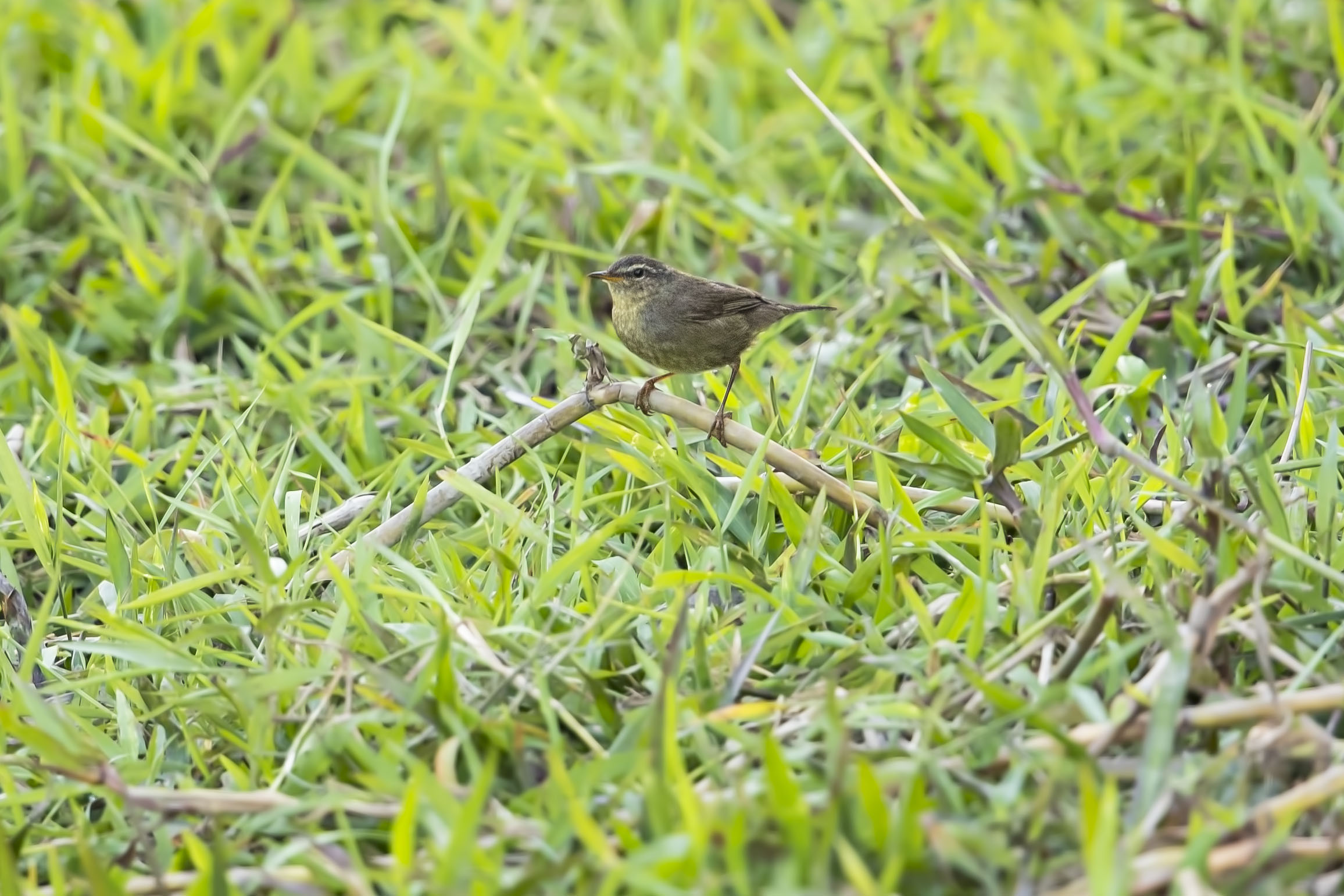
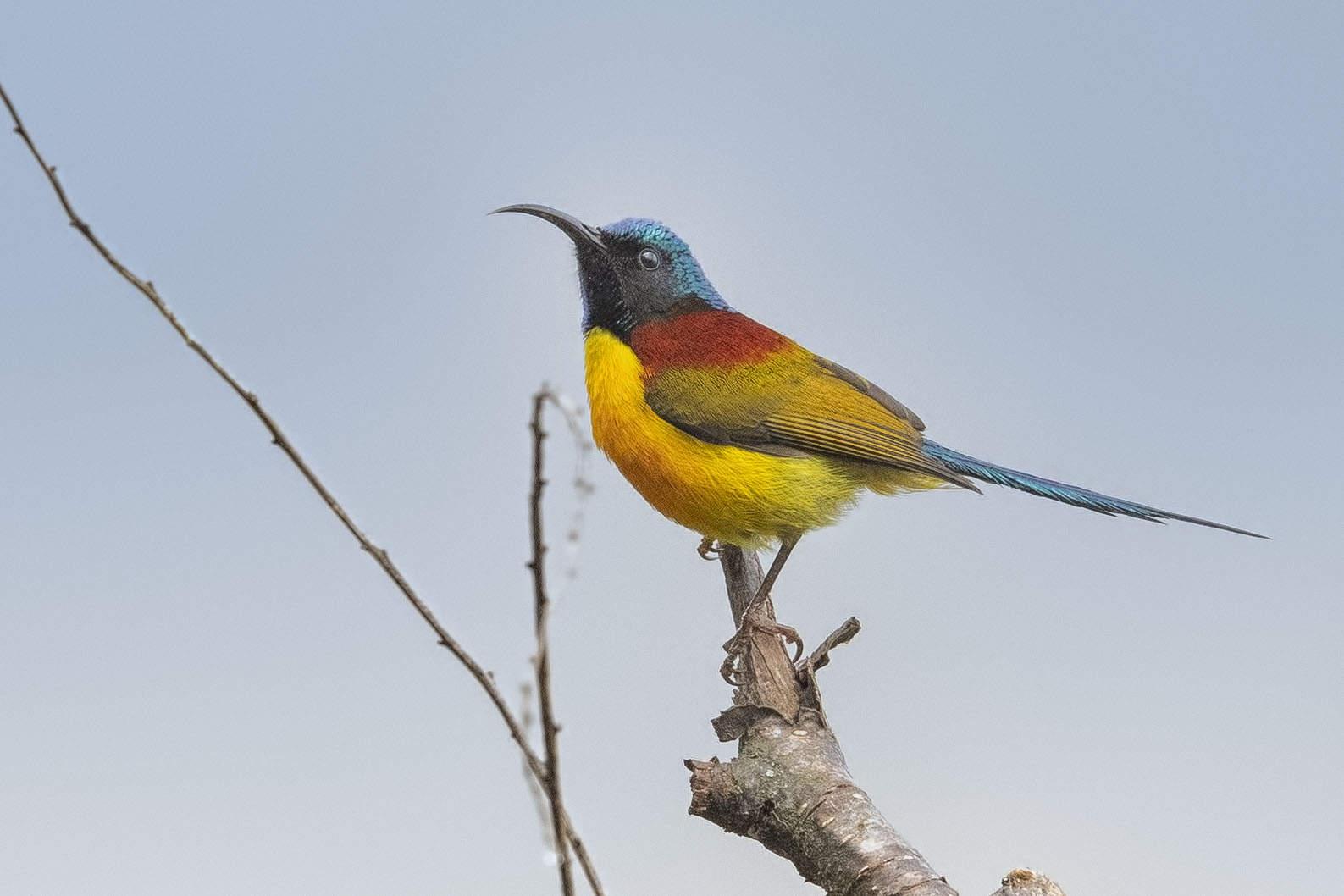
Droves of goldcrests were in a feeding frenzy on the pine trees on the down slope. These guys just don’t seem to stay still and in the majority of my images they are just a blur!


A short distance away I spotted this little bird (below) at the side of the road. I was informed it was a female Hodgson’s redstart by Ravi our guide.

The scenic beauty of Walong was spectacular and I found myself whipping out my iPhone to capture the landscape with as much enthusiasm as I did for birds.
Here are a few sample images.


A lot more where those came from and I will post the complete set of images in the gallery section later.
The rain did play a bit of spoilsport and ruined a few sessions but I did manage to get a fair number of nice images.




19, February, 2019
Maguri Beel, Tinsukia Assam

The eventual plan was to wind up in Manas for which we needed to retrace our steps and go back west. Hence the return to Maguri Beel.
Waking up early with a breakfast of cup noodles, we left Walong at 5am. It had been raining pretty heavily all night and the road was littered by rocks that had rolled down the mountain side.

A couple of times our guide was forced to get out of the car and physically clear the way.

We stopped around 8am for a toilet break and to stretch our legs. A tree full of whiskered yuhinas held our attention and it was a good half hour later before we got underway again.
An hour later, a few hundred yards ahead, beyond one of the curves in the road, we caught a glimpse of a huge tree falling. On reaching the spot a large landslide had just taken place and completely blocked the road.
Getting out of the car to evaluate the extent of the damage there was an eerie silence and the only sounds were the intermittent – but alarmingly regular – rattle of pebbles and small rocks rolling down the mountain side!
If we had not taken the toilet break we might just have gotten past before the landslide occurred. Of course there was also the possibility that we may have been trapped in it! We’ll never know, but the bottom line was we were stuck till the road was cleared.
Tracking back to a small basti about 2 km away we parked ourselves at a tea stall and waited.
It was a long wait. And we spent our time consuming copious cups of tea, photographing little buntings and olive-backed pipits in the bushes outside and exploring the area.


Behind the village on the downward slope a series of concrete steps (they felt like close to a hundred) led down the mountainside to a rickety suspension bridge that crossed a deep gorge. Apparently it connected to a village on the other side across the river.
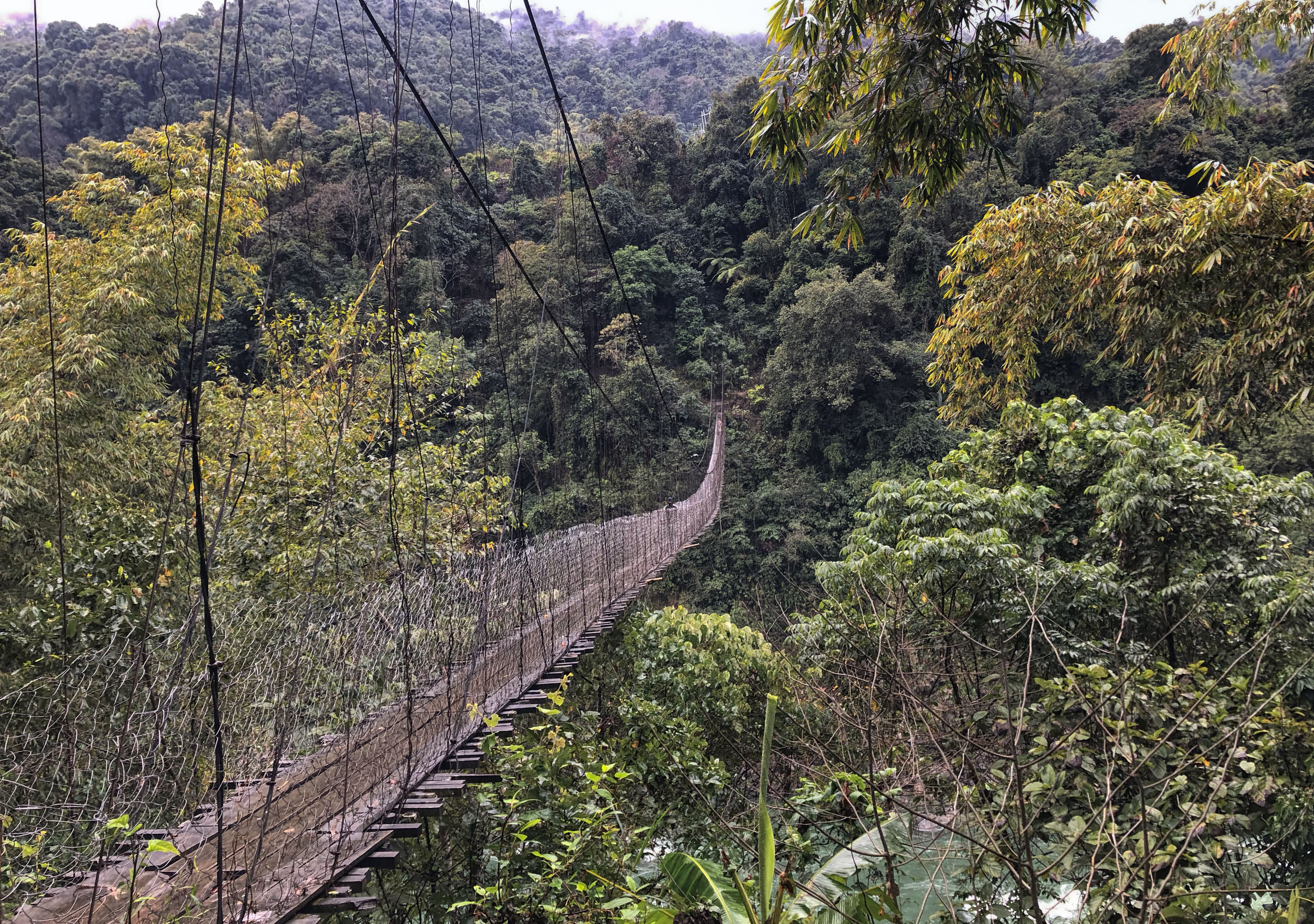
Barely wide enough to allow two people to pass abreast the bridge swayed alarmingly from side to side. It’s floor was made of wooden planks some of which had partially rotted and it tilted significantly to one side. Yet villagers, including small children crossed it as if they were strolling in the park!

It took all of 6 hours for the landslide to be cleared. After which we hightailed it out of the area as fast as we possibly could and reached Maguri Beel after sunset.
20, February, 2019
Maguri Beel, Tinsukia, Assam
Maguri Beel was an interim stop on our way to Pakke. The plan was to spend a day here doing a short stint on the beel to try again for the falcated duck and later that evening for the Oriental bay owl in the Dehing Patkai forest.

While waiting for the boat we tested our birds-in-flight photography skills on barn swallows that skimmed the water.


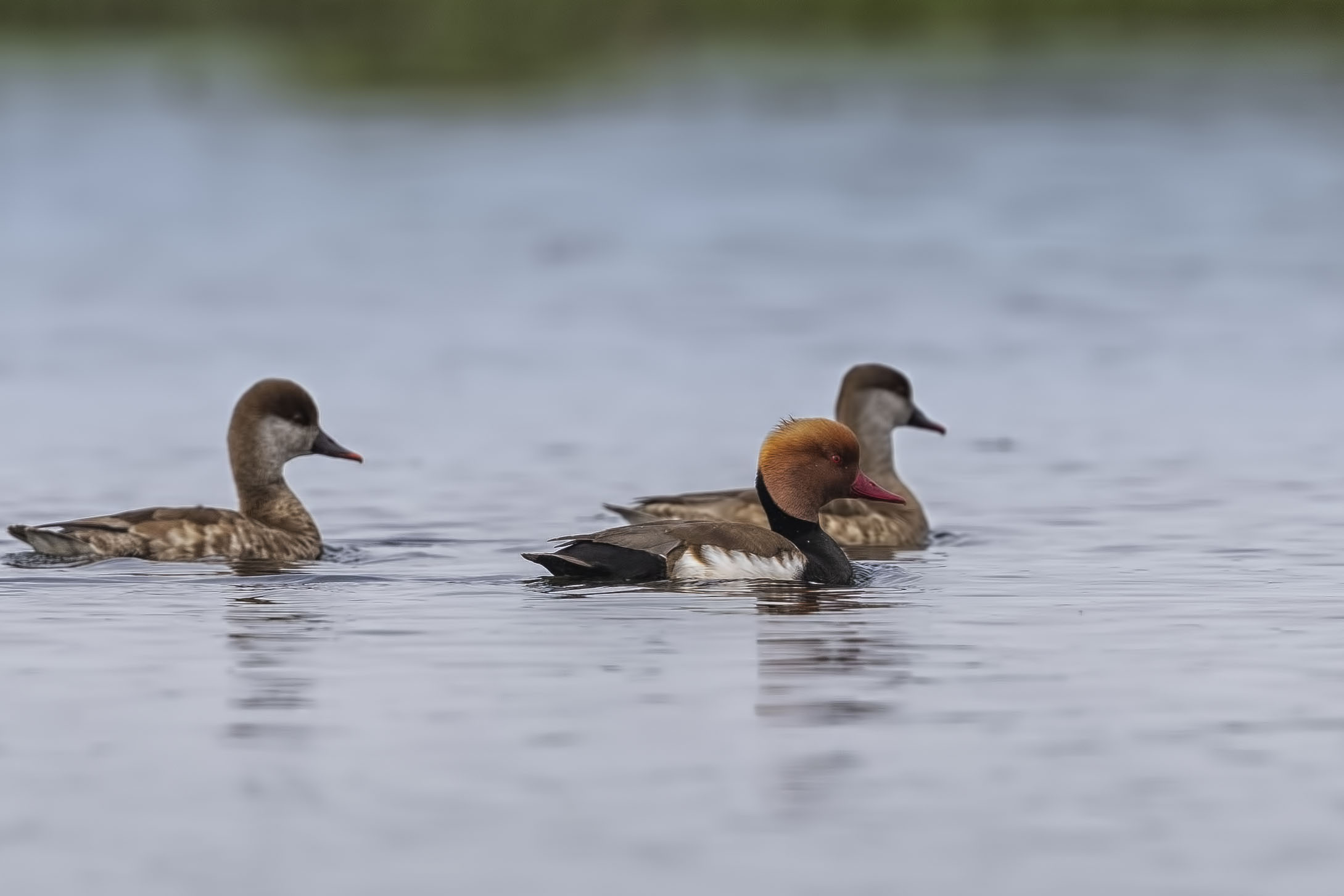

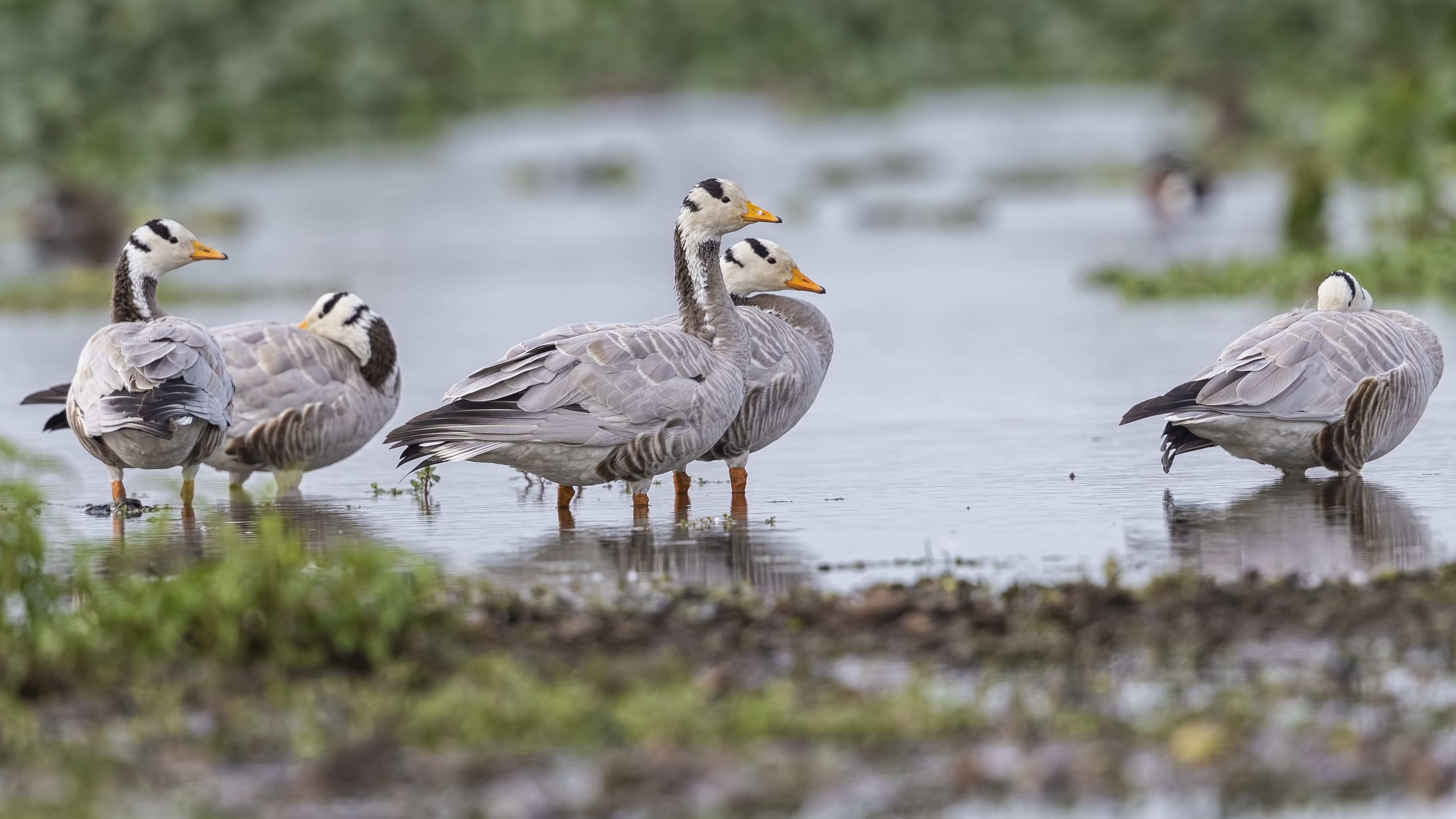


It was an overcast and pleasant on the beel and though we did get a few nice images there was still no sign of the falcated duck. By evening the events over the past week was beginning to catch up with us. Also it was a moonlit night, which was not ideal to spot the bay owl and hence we decided to give it a skip.
Instead we took a torch around the camp for – thankfully successful – sightings of Oriental scops owls.

21-23, February, 2019
Pakke, Arunachal Pradesh

From Maguri Beel to Pakke was another long drive and we planned to leave early in the morning. We were to change cars and also a new birding guide would be joining us at Kaziranga.
At Kaziranga there is this huge swamp adjoining the road where the great Indian one-horned rhinoceros can be spotted. These beautiful beasts are a threatened species with only a little over 2000 animals left in the wild. In the same swamp hog deer and Wild buffalo could also be seen grazing.
We stopped here and took a few obligatory images before moving on to Pakke.

By now it was late afternoon.
Just before we hit the camp we spotted a flight of wreathed hornbills returning to roost. A few of them settled on the top of a bare tree a considerable distance away. The (heavily cropped) image below was taken in fading light using a 2x teleconverter on the 500mm lens handheld using only the roof of the vehicle as support!

Pakke Nature Camp consisted of 4-5 wooden cottages and a dining area spread out around a large wooded property in the middle of nowhere. As in most of the other places we stayed, the cottages were built on stilts. A narrow, relatively steep flight of wooden steps led to the entrance of each cottage. Elephants play havoc here and the entire camp was surrounded by an electrified fence.
Our target species in Pakke was Blyth’s kingfisher.
For me personally this was exciting. I have seen, and photographed, 10 of the 12 kingfishers found in India. Of the two that remained, Blyth’s kingfisher and Crested kingfisher, the former was far less common.
It’s common knowlege that the more you crave something the tougher it is to attain. This was no exception! This bird was known to frequent a river bed that is strewn with medium to large boulders. Most of it is dry with the exception of a stream that flows through. Parking the car by the side of the road, the plan was to hike up the river bed in search of the bird. In several place we needed to wade through flowing water that was occasionally thigh deep and we were advised to use slippers instead of shoes.

It was hot and humid and elephant dung was everywhere. Remember, we were barefoot and there was the little matter of the place being infested with leeches!
Ahh…almost forgot mention… all this and carry our camera and tripod the combined weight of which is – give or take a few hundred grams – 10 kilos!
We spent two days in search of this bird. Yes, we did get several sightings but they were either at a distance or when he was whizzing past in the opposite direction forcing us to turn around and trudge back for another kilometre or so.
Looking back I’m convinced the little rascal was toying with us. All I have to show for all that hard work is the heavily cropped, noisy image below! Without a doubt I will return!!

Between hikes up and down the river we did park ourselves at various spots that the bird was know to come and perch. He never turned up but we did get a few consolation images a few of which are seen below.


Back at the camp we tried for owls at night and I must say we fared much better that on the river bed!
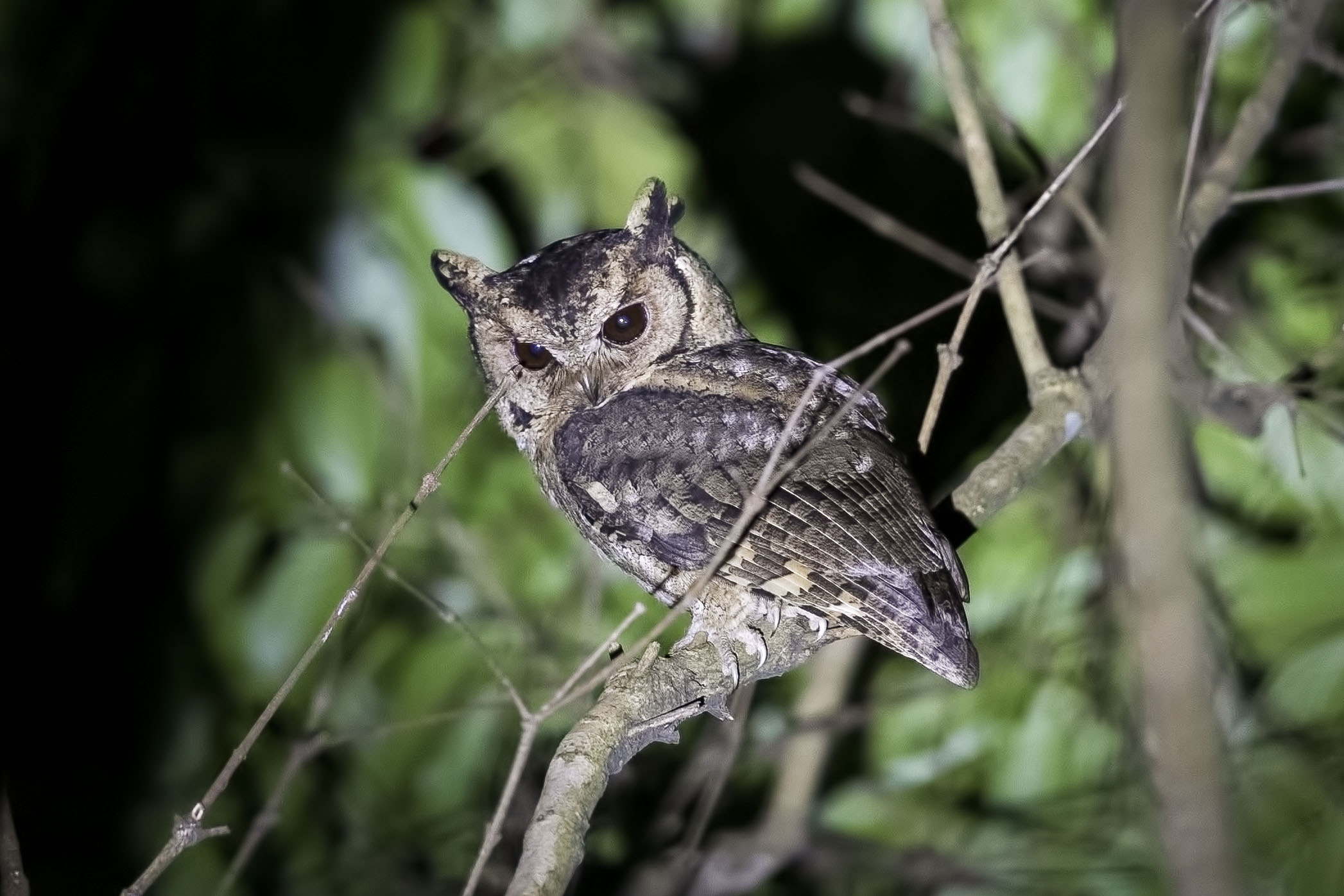

Thanks to the heavily wooded and remote location of the camp there were a lot of birds to be seen right from the verandah of our cottage itself.
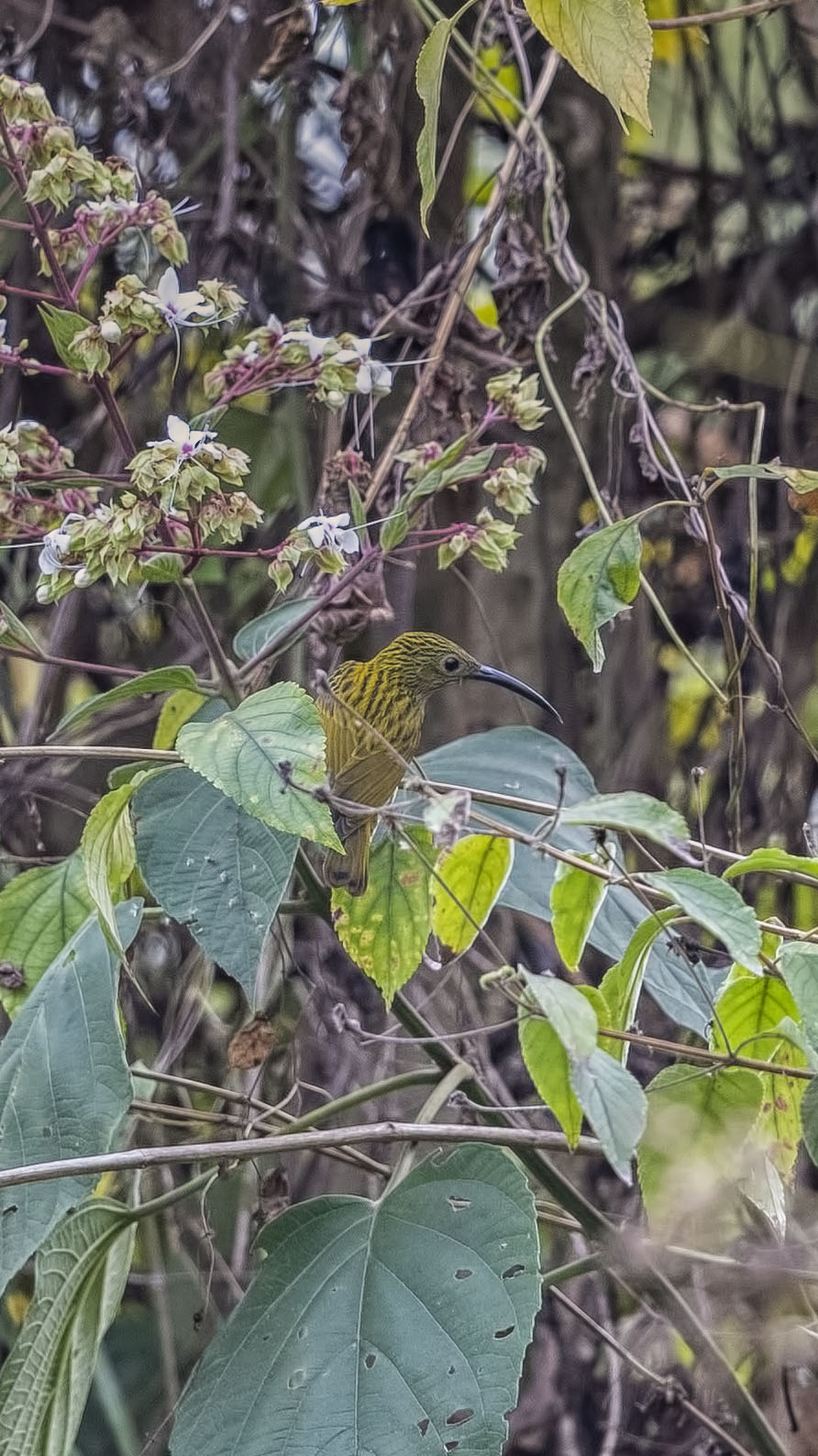


And so it was that a nice image of yet another target species eluded us!
24, February, 2019
Manas National Park, Assam

It was a long drive from Pakke to Manas and we arrived in the evening. In time to do a late evening safari. The target species here was the critically endangered Bengal florican. Less that 1000 of these birds were estimated to be alive in 2017.


These are shy birds and are typical found feeding in fields. When disturbed they will crouch down and, despite their size are almost impossible to spot if you do not know they are there. Zipping through fields in search of these birds in a Gypsy was an exhilarating but jolting experience!
There was this one time when we did spot a bird crouching as we approached and we decided to wait about 50 yards away hoping to get a shot when it finally got up.
We waited for the better part of an hour sitting comfortably in the jeep and yet could help but fidget every so often as we cramped up. The bird on the other hand (below) waited absolutely motionless. In that game of waiting the bird won hands down!

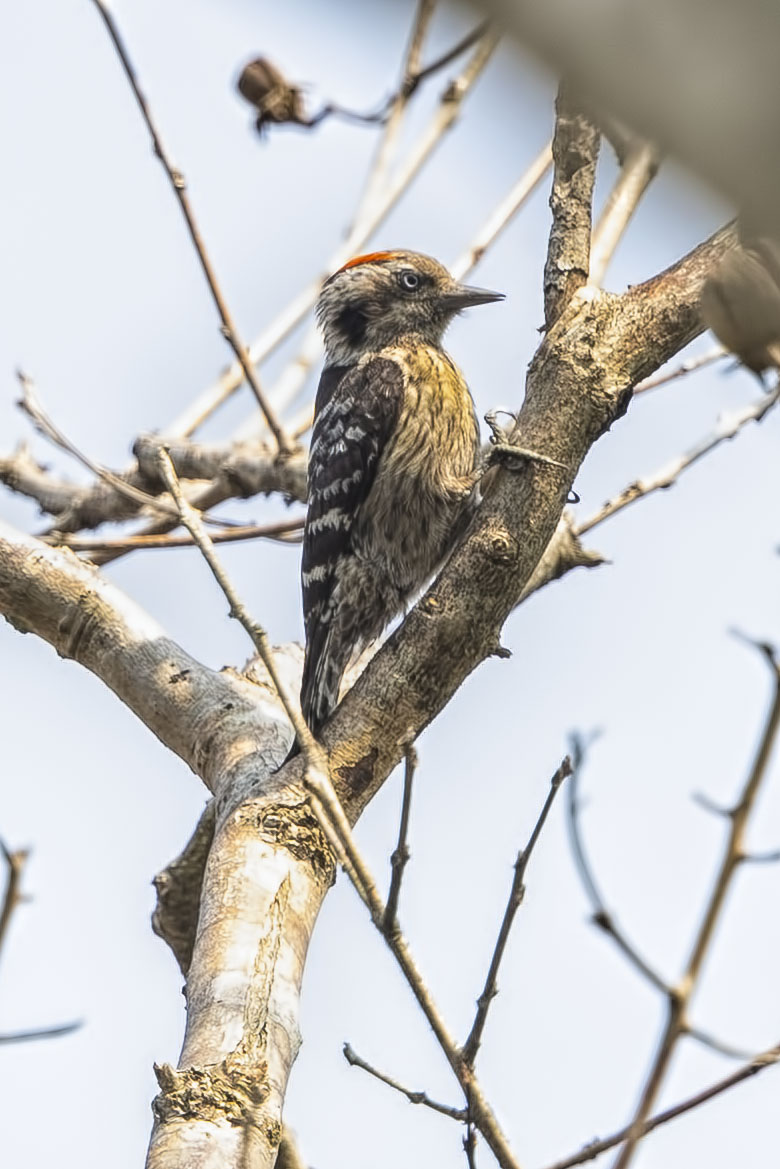
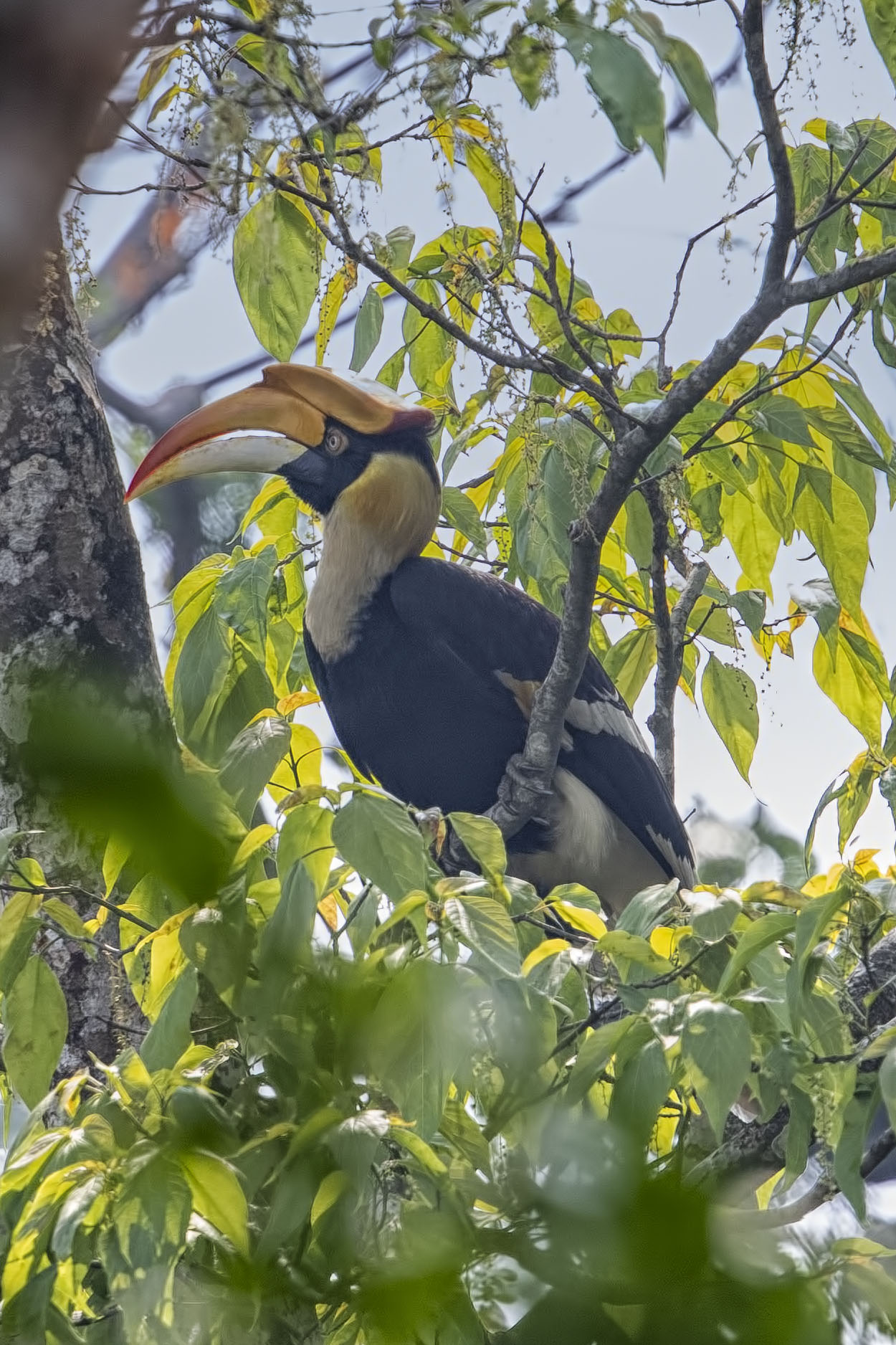
While searching for the floricans there were other birds we saw a random selection of which are reproduced below.


Manas is huge.
We stayed in the Western Sector and the habitats we explored were dense forest, grassland and fields.









28, February, 2019
We drive to Guahati to catch our flight back home.
I still have many more images to process. Hopefully over time I will add them to the blog and to the gallery.
There are also many more incidents that I would love to have elaborated on like the crested serpent eagle with its kill, how we got images of Savannah and large-tailed nightjars, the pair of crested tree swifts on their nest, how we eventually got the common hoopoe to open its crest or even the spotted owlet that kept playing hide and seek with us in Manas.
But for now I felt that I needed to get this blog out. Any further elaboration will wind up making this more of a book and less like a blog. As it is the computer is already beginning to freeze with the overload!
So…Coming back to the original question… How would one rate this particular trip?
True, we missed many of our target species. In some case we did get a sighting but no images.
We bird photographers are a greedy lot. We want full frame, tack sharp images. Preferably in perfect light with the bird positioning just right and with no intervening branches or leaves. I have learnt the hard way that in the forest there are absolutely no guarantees!
Also, living accommodation, to put it mildly, was far from 5 star. Although I must admit it was always clean and comfortable.
On the plus side it was one hell of an adventure. Traversing through some of the most spectacular and remote locations not only in India, but without a doubt in the world as well.
I took close to 14000 images. We saw 275 bird species (and still counting), of which, for me, well over a 100 were lifers thanks to the hand-picked superb guides that accompanied us.
The icing on the cake was the company. I was with two individuals, Satish Thayapurath and Aseem Kothiala who, apart from being hard core birders, were great, easy-going people and the camaraderie over the entire 18 days totally overshadowed any minor lapses incurred during the trip!
Of course I am disappointed that we did not get a few more sightings and images. Especially of the target species. And the fact that many of the shots I got were far from optimal.
But as trips go this was one mother of a trip. One that will definitely be tucked away into my ‘A’ list folder so that I can bring it up from time to time and relive all the fond memories!
Unforgettable ,adventurous trip with two legends
Thanks Satish. It definitely was all that and more…but it is I that should be making that statement!
Indeed a fabulous report. The images are outstanding. Thanks for penning it down so well. Regards and Happy Birding
Thanks Aseem. Apart from the superb location it was the company that made all the difference!
Was a pleasure reading through the blog Doctor! Thanks for sharing
Thank you. So glad you liked it. 🙂
Simply incredible photo, Ian, and wonderfully documented. Heartened to see untouched, clean and beautiful places still exist in India.
Thanks Anjali. Yes, India still has untouched and beautiful places, especially in the North East…but their numbers are receding at an incredible rate unfortunately.
OMG! What a trip. Fabulous pictures. I was waiting for this blog for a long time…
Thanks Lou! It was an outstanding trip!! Many more images but I thought if I don’t get the blog out now I never will. Will add more pictures as they get processed.
Clap clap… It certainly was one helluva trip. Great blog nice pictures memories to last a lifetime.
Thanks Nelson. 🙂
Fantastic work sir
Thank u for sharing
Thank you 🙂 !
Superb trip report. I felt like as if I visited all the places. TFS.
Thanks! 🙂
You have a fan in me sir! Your writing is very engaging, laced with beautiful photographs. I am very impressed Sir
Many thanks Sujatro! So glad you liked it. 🙂